Image

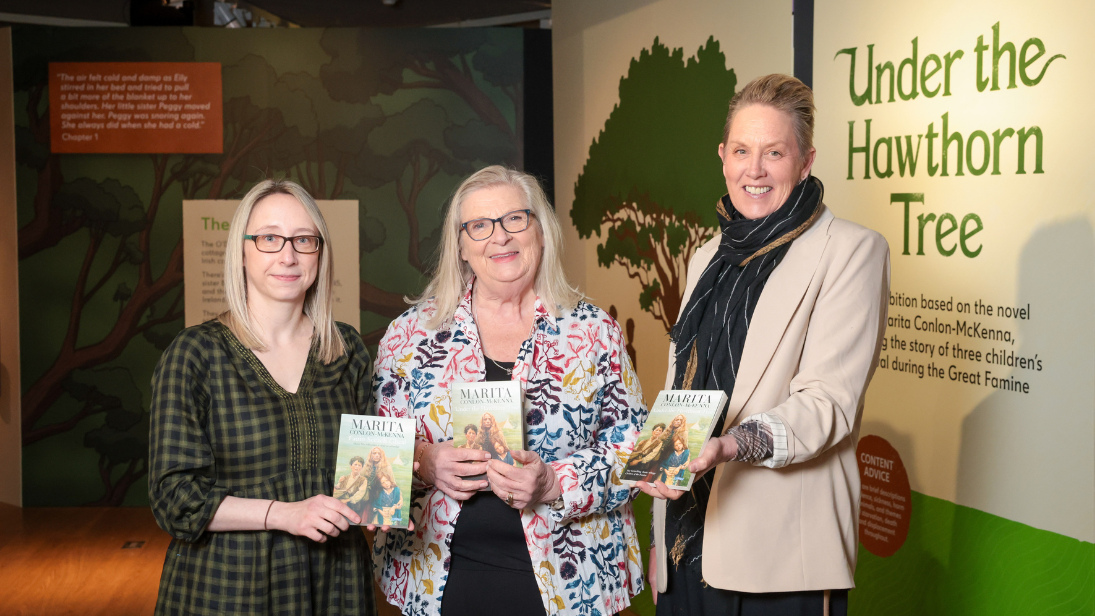
Photo caption (left to right): Senior Curator of History, Victoria Millar, Marita Conlon-McKenna, author of Under the Hawthorn Tree and Kathryn Thomson, Chief Executive of National Museums NI
Under the Hawthorn Tree, a new, immersive exhibition inspired by one of Ireland’s most beloved children’s stories, has officially opened at the Ulster American Folk Park.
The exhibition invites visitors to step into the world of siblings Eily, Michael and Peggy O’Driscoll as they navigate the challenges of the Great Famine, reimagining renowned author Marita Conlon-McKenna’s bestselling novel through soundscapes, interactive displays, scents and rarely displayed objects from across National Museums NI’s collections. Designed to be emotionally resonant and engaging, the experience places children’s learning at its heart, bringing the story vividly to life for a new generation.
Marita Conlon-McKenna and her family attended the opening of the exhibition at the Folk Park in Omagh this week, joined by a visiting school and representatives from the museum. She said,
“Seeing Eily, Michael and Peggy’s story take shape in a museum setting is something I never imagined when I first wrote Under the Hawthorn Tree. The book has travelled with so many readers over the years, but this is the first time the children’s journey has been interpreted in a full-size exhibition. What the team have created gives visitors a sense of the world the children moved through, the choices they faced and the strength they found in one another. It’s been brilliant to watch the story take on a new life and I am incredibly proud that it will now continue to engage audiences on this important part of our history, as a museum exhibit.”
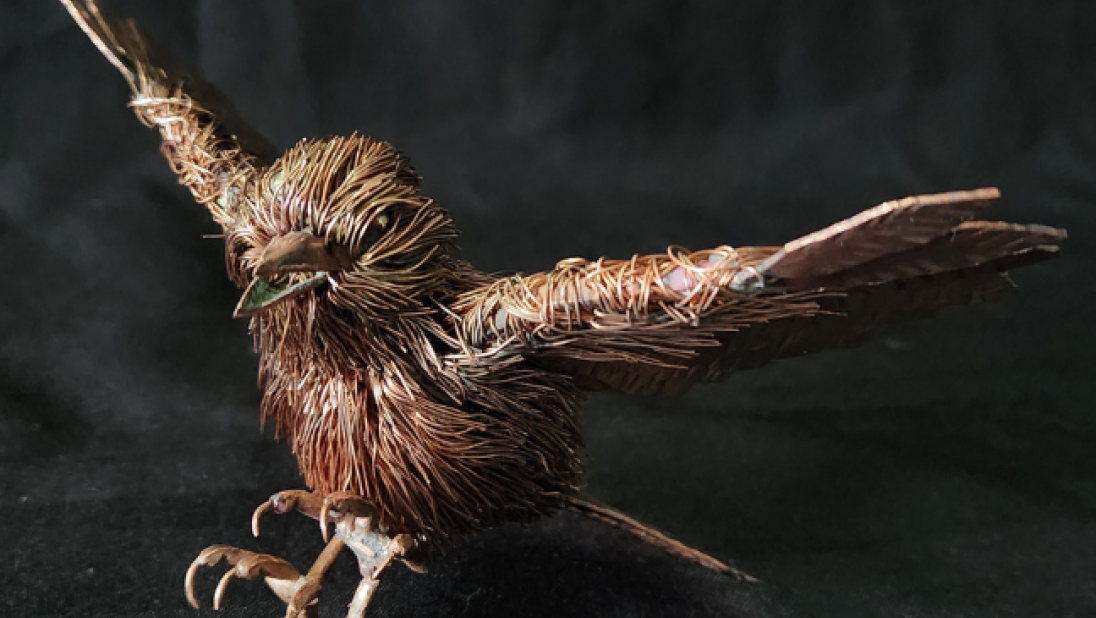
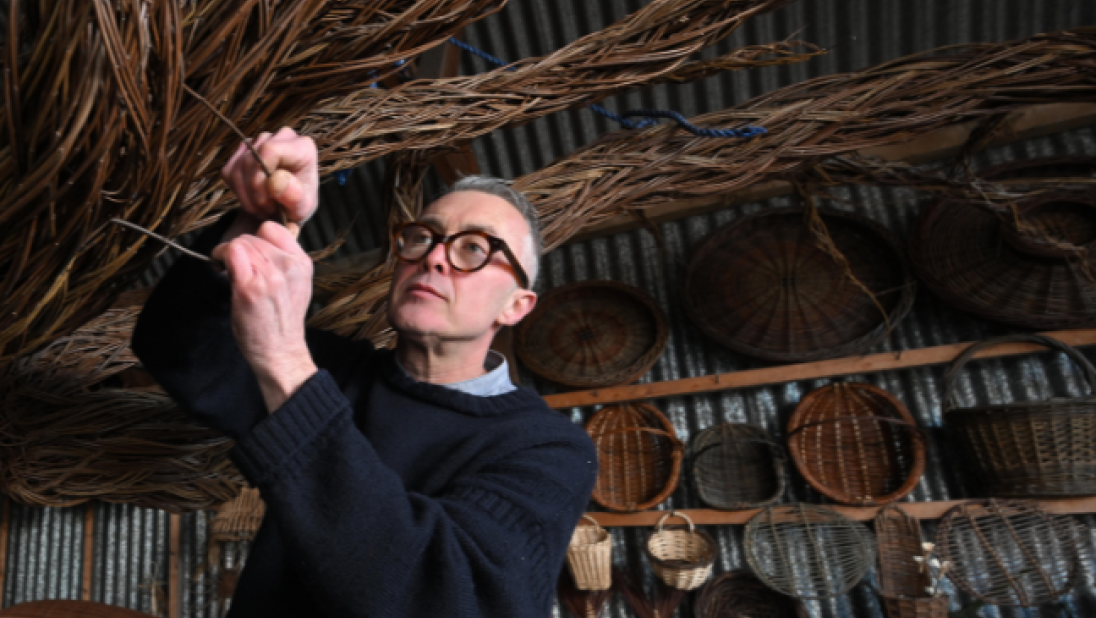
At the centre of the exhibition stands a full‑size handcrafted hawthorn tree, created by willow weaver Bob Johnston at the Ulster Folk Museum, outside Belfast, which is part of the National Museums NI group. Whilst representing a true marker of heritage in exhibition design, its branches adorned with copper birds handmade as well by the blacksmiths at the two museums, the tree also serves as a dedicated reading space for visitors, featuring the book in both English and Irish. Throughout the rest of the exhibition, carefully selected objects from across National Museums NI’s collections - including a traditional potato basket, natural history specimens and a simple shawl - help root the story in the realities of daily life during the Famine. Combined with sound, scent and interactive elements, these features create an environment that allows visitors to understand the children’s journey in a fully immersive way.
As the first major exhibition to open at the Ulster American Folk Park in four years, Under the Hawthorn Tree marks an important moment for the living history museum, which is also celebrating its 50th anniversary this July. Building on the success of the Bad Bridget exhibition, which uncovered the experiences of Irish women who made the difficult decision to emigrate to North America, this exhibition turns its focus to a more child-centred experience, especially enhancing school visits by enriching learning and deepening curriculum connections.
Victoria Millar, Senior Curator of History at National Museums NI, said,
“From the very beginning, our focus was on how we translate a cherished story that so many people know and love, from the page and into a physical experience that would be just as memorable and educational. Every object, every sound, every design choice was shaped by the children’s perspective in the book. We want visitors to feel the uncertainty, the hopefulness, and the resilience that define Eily, Michael and Peggy, as they move through the exhibition.
“In the first section of the exhibition, objects including a potato spade and a potato basket serve to emphasise the importance of the potato crop as well as the devastation caused by the blight. Later in the exhibition, we have examples of objects from the museums' collections, reflecting the items that the children took with them on their journey, including blankets, a ladle and a blade. A host of animals that the children encountered on their journey are also included, ranging from a cormorant to a badger. These are probably my favourite.”
Ulster American Folk Park is a place where complex histories are explored to ensure that the stories of our past remain relevant today. The exhibition speaks to the museum’s core purpose of communicating the links between Ulster and North America. As one of the defining drivers of emigration, the Great Famine shaped America’s identity for generations, making the exhibition opening this year - the 250th year of the United States - particularly resonant.
Chief Executive of National Museums NI, Kathryn Thomson, added,
“The Great Famine was one of the most important drivers of emigration to the United States. By telling this story at the Ulster American Folk Park, we’re connecting past and present in a way that feels meaningful. Under the Hawthorn Tree reflects our commitment to creating a museum experience - whether you’re visiting with your school, as a family or as a tourist - to explore shared histories, understand different experiences and find common ground through storytelling. It shows how museums can hold difficult histories with sensitivity while still making them accessible, and why it is therefore so important that we continue to share them.”
Under the Hawthorn Tree is included in general admission to the Ulster American Folk Park.