

Stories
Pattison's Tinsmiths
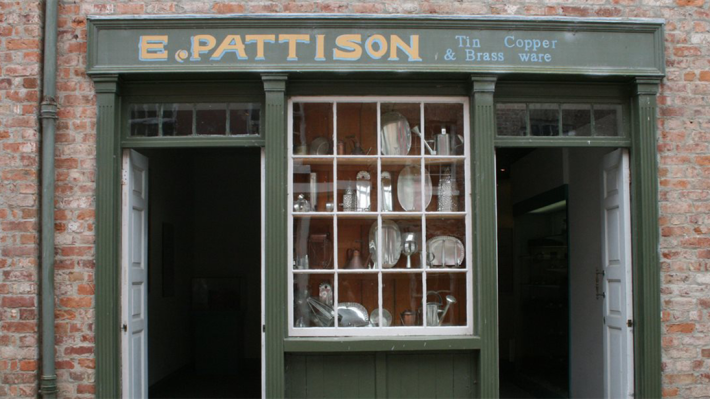
In 1700s America, tinware became popular for making household goods. Edward Pattison was one of the first tinsmiths in America.
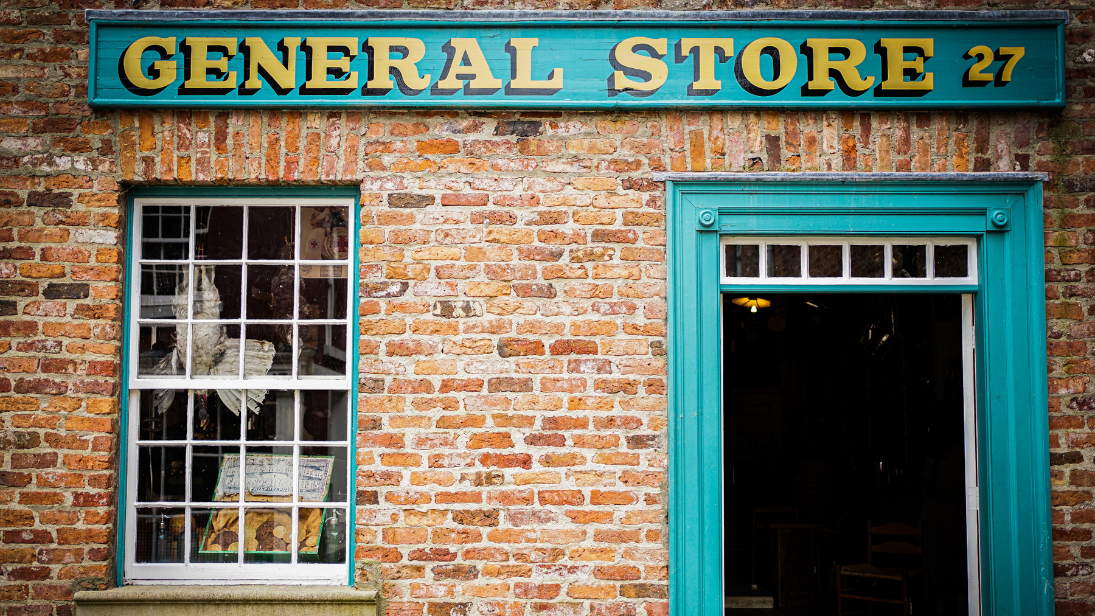
The General Store was an essential part of American life as settlers built communities and livelihoods in their new country.
The General Store was an essential part of American life as settlers built communities and livelihoods in their new country.
Shopping was different in those days, and the General Store was more than just a shop. It was a lifeline to families and businesses trying to make their way in often hostile conditions, supplying goods of all descriptions including coffee, tea, molasses, maple sugar, tobacco ploughs, scythes, baskets, cooking utensils, fabrics, ribbons, buttons, thread, needles and tape.
The General Store also often provided a market for local produce such as bacon, eggs, chickens, flaxseed, dried apples and buckwheat flour which farmers could exchange for items they needed.
It was also a source of long-term credit. People settled their accounts once a year when the harvest was over, coming into town to renew commercial relationships, build new ones and catch up with friends and neighbours.
It is easy to imagine how the General Store became a place of importance not only for basic survival, but also for the exchange of information, news, gossip and stories.
Have a look at the wide range of goods on display in the general store. There were many miscellaneous items for sale in the general store, from footwear and books to candles and gunpowder.
In 1700s America, tinware became popular for making household goods. Edward Pattison was one of the first tinsmiths in America.
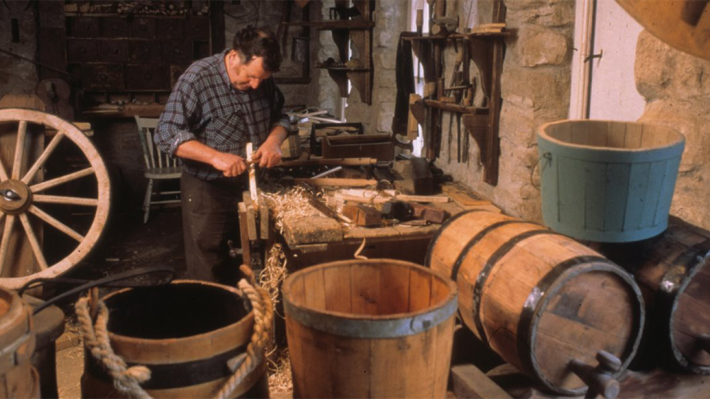
Wheels are complex structures that required skills in carpentry and blacksmithing to build.
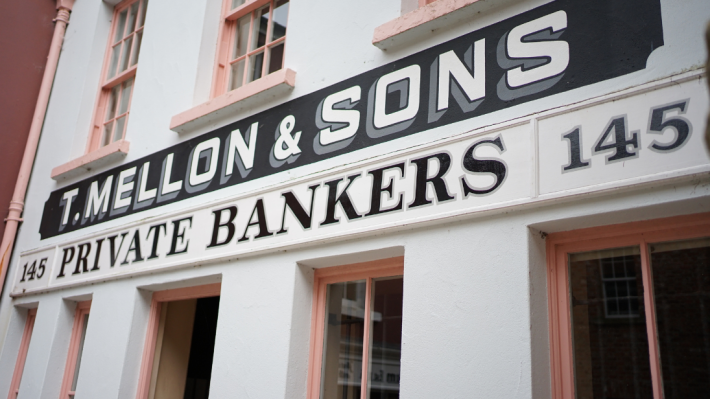
Thomas Mellon established his bank in January 1870 on Smithfield Street in Pittsburgh, Pennsylvania.